The hot weather across the south has been sitting with us for days, and it brings a set of problems that are easy to underestimate. Heat makes people unwell quietly. Someone can go from a bit tired and headachy to seriously ill without any single dramatic moment, which is exactly why it catches people out.
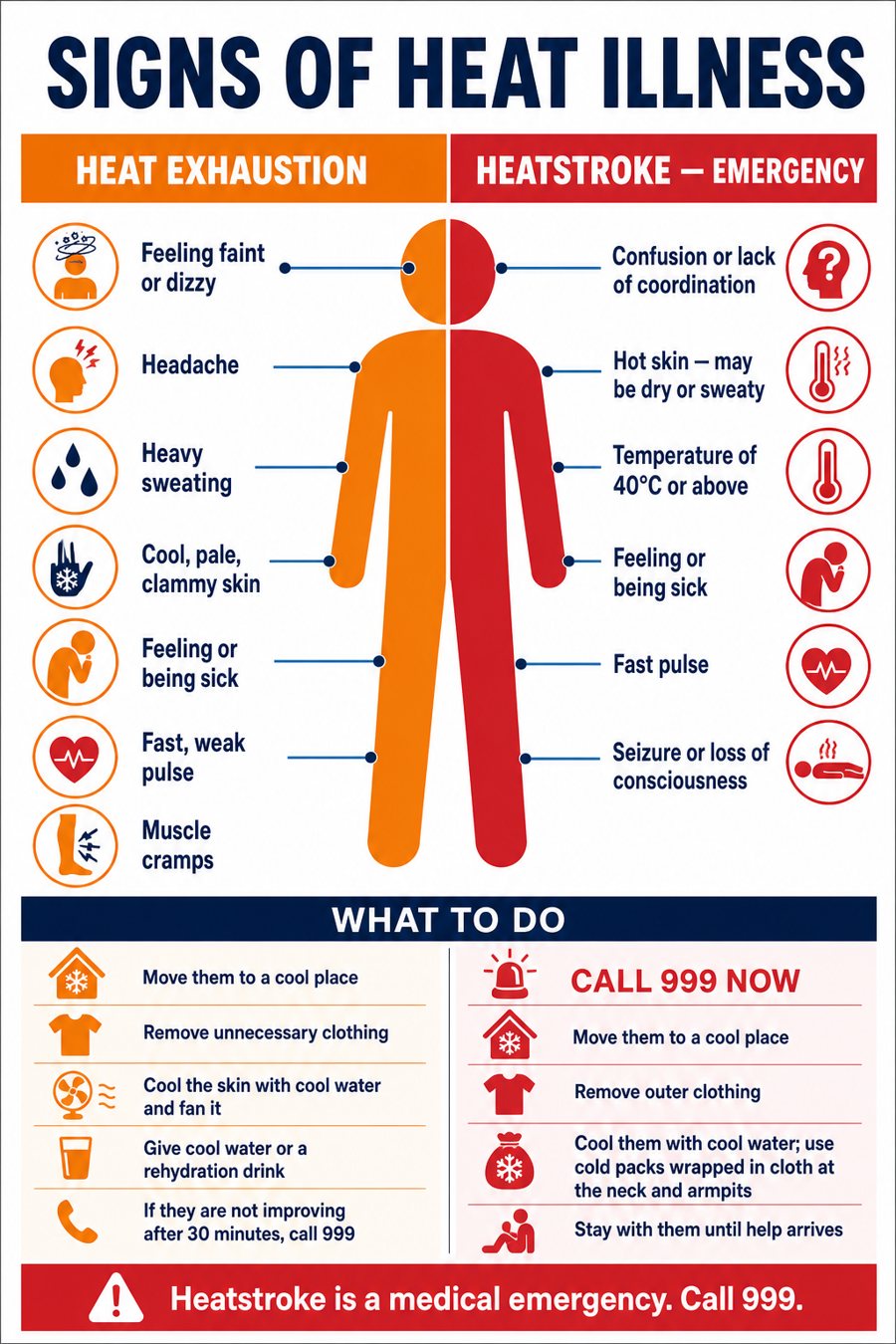
The first stage is heat exhaustion. The signs include tiredness, dizziness, a headache, feeling sick, heavy sweating with pale clammy skin, and cramps in the arms, legs or stomach. Someone with heat exhaustion is, for the moment, still manageable where they are. Move them somewhere cool, get them to lie down and raise their legs a little, give them water or a rehydration drink, and cool their skin with a cold flannel or a spray of water. Most people start to feel better within half an hour.
What you are watching for is the point where it stops improving. If the person is still unwell after thirty minutes, or gets worse, treat it as heatstroke and call 999. Heatstroke is a medical emergency. The warning signs are a high temperature, skin that is hot but no longer sweating, confusion or a change in behaviour, a fast or laboured breathing pattern, and in the worst cases a loss of consciousness or a seizure. While you wait for the ambulance, keep cooling the person however you can and stay with them.
Children and older relatives feel the heat sooner and tend to say less about it, so they are worth keeping a closer eye on. So is anyone working outdoors or on a hot site, where the heat builds across a shift rather than hitting all at once.
None of this is complicated, but knowing the line between the stage you can manage and the stage that needs an ambulance is the part that matters. That line is the same one we teach on every course, whatever the weather.